|
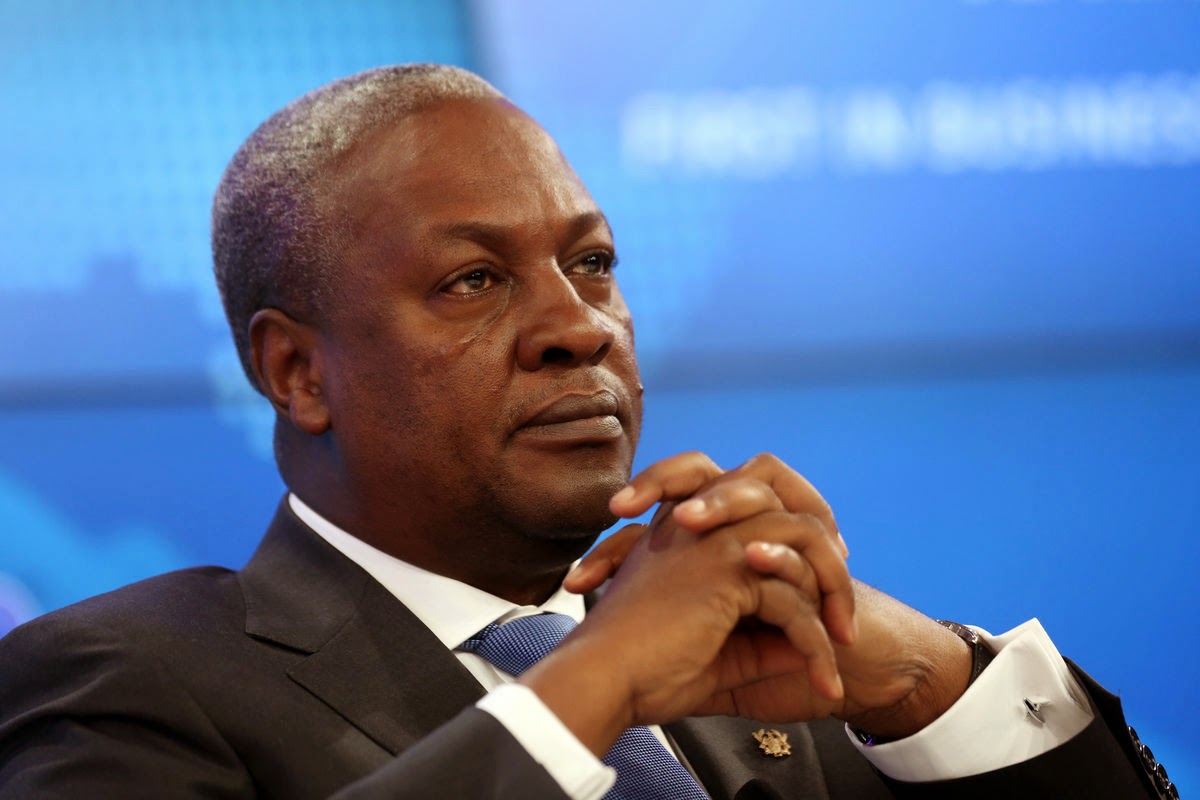
| Sheik Dr Omar Nuhu Shaributu |
By Ekow
Mensah
The falsehood
is that Al-Qaeda, the Taliban, ISIS and other such demented organizations are
creations of a brand of militant Islam.
Connected
with this falsehood is also the claim that “Jihad” senseless adventurist’s war unleashed
by Moslems to convert the whole of the world to Islam.
The truth
however is that all of these organizations were established by Western
intelligence as instruments of foreign policy and their methods were designed
by agencies such as the Central Intelligence Agency (CIA) of the United States
of America and the MI5 of the United Kingdom.
There is now
irrefutable evidence that several of the terrorist organizations which emerged
before the Taliban and Al Qaeda were fabricated in Africa to subvert the national liberation
movements and undermine the efforts of nationalist leaders like Osagyefo Dr
Kwame Nkrumah and Patrice Lumumba.
In his book “J.F.K
Ordeal In Africa” Jack Mahoney reveals how the CIA collaborated with the
opponents of Nkrumah and cold bloodedly murdered as many as 300 innocent
Ghanaians through such activities as bomb explosions and plain faced
assassination attempts.
In the Congo,
Ludo Martins, a researcher has provided irrefutable evidence of the conspiracy
of the Western intelligence agencies to assassinate the democratically elected
Prime Minister, Patrice Lumumba.
Western
intelligence agencies also keenly supported the apartheid regime in South
Africa and employed torture and assassinations, against the African National
Congress and its leaders and members.
They did the
same things in Guinea, Mali, Mozambique, Angola, Egypt and many other countries
in Africa.
In the case
of Al-Qaeda and the Taliban, they were for all practical purposes formed,
directed and armed by the CIA to topple a Soviet backed government in Afghanistan
and to expel Soviet troops from there.
The United
States of America and its allies had decided that the Soviet presence in Afghanistan
was detrimental to their interest in controlling the oil resources of the
Middle East, the Persian Gulf and the Indian Ocean and they established these Trans
national groups to harass the Soviets.
They were applauded by the Western media
as the bombed civilians and soldiers alike and cut throats to make their
sickening point.
The ISIS was
also created by the Western intelligence with the full collaboration of the
Israeli intelligence machinery MOSSAD for the sole purpose of weakening the resistance
to the Zionist occupation of Palestine and Arab lands.
ISIS main objective
was to assist in the overthrow of the Assad regime in Syria which the West sees
as a key part of the resistance against Zionism.
Western
intelligence believed that the overthrow of Assad would weaken Hezbollah in
Lebanon, Hamas in Palestine and the Islamic Revolution in Iran and thereby
provide respite for Israel.
The extremism
spreading across the globe is not a creation of Islam but an extension of
Western intelligence operations aimed at deepening the domination of the world
by the forces of imperialism.
In Islam
“Jihad” is nothing more or less than the perseverance in the pursuit of goals
and the goals may be excellence in education, social and political life.
The lie
against Islam stands exposed and we are reproducing excerpts of Jack Mahoney’s
book “JFK Ordeal In Africa” for the information of our readers.
Please read
on;
Conspiracy and
Subversion Directed Against Nkrumah by the CIA and its Local Collaborators
Despite
the Kennedy administration's diplomatic gains in Ghana, a sudden outbreak of
political violence in the summer and fall of 1962 left Nkrumah more fearful
than ever of Western intentions. On August 1,1962, he was nearly killed when a
would-be assassin threw grenade at him as he was greeting a group of school
children in the small town of Kulungugu. Washington professed outrage at subsequent accusations in
the Ghanaian press that the West was involved in the attempt. But the record
reveals that Nkrumah had reasons for suspecting the worst.
Ghana's
neighbor to the east, Togo, had long been a meeting and staging ground for
Ghanaian opponents of the Nkrumah regime. From that point forward, Togo served
as a dissident and, at times, terrorist sanctuary for Nkrumah's adversaries.
Washington's
ambivalence about protecting Olympia stemmed in good part from its desire to
conceal CIA association with Nkrumah's Ghanaian opponents in Lome. The CIA's
"leadership alternative" in Togo, in short, was not to be exposed. A
chance for reconciliation and
stability in both Ghana and Togo was thereby tragically lost.
stability in both Ghana and Togo was thereby tragically lost.
Kennedy's
meeting with President Olympio added a further twist to U.S. involvement in the
Ghana-Togo feud. Kennedy was greatly taken with Olympio's sophistication and
strongly pro- Western views and, undoubtedly, took his side in the dispute with
Nkrumah. By late September 1962, the toll of dead and wounded exceeded 300.
There was little doubt that Lome was serving as the base of terrorist
operations and, at least in Nkrumah's mind, the reports of meetings between
American officials and Gbedemah and Busia revived a fearful specter.
Kennedy
considered the situation serious enough to warrant a full-scale review of U. S.
-Ghana relations and, in particular, reconsideration of the phased
disbursements of aid for the Volta project. He asked the State Department and
the CIA to take "a long hard look" at Ghana and ordered Mahoney home
for consultations.
The
CIA, in its fashion, had difficulty in leaving well enough alone. "The
United Party of Ghana," one CIA cable from Accra wishfully pronounced,
"is organizationally and mentally prepared to assume the reins of
government in Ghana should a turn of events make this possible. Agents in
London and Lome continued to consort with exiled Gbedemah, who told then what
they wanted to hear: that Nkrumah had murdered several of his ministers (this
was simply
erroneous) and was on the brink of "popular collapse." The State Department was ultimately obliged to instruct the embassy in Lome to pass the word that contacts with Gbedemah and the rest remain covert. for this marginal vindication of common sense, officials at Langley scorned their counterparts at foggy Bottom as "pro-Nkrumah."
erroneous) and was on the brink of "popular collapse." The State Department was ultimately obliged to instruct the embassy in Lome to pass the word that contacts with Gbedemah and the rest remain covert. for this marginal vindication of common sense, officials at Langley scorned their counterparts at foggy Bottom as "pro-Nkrumah."
The
embassy in Accra saw no basis for operational activity and recommended that
"we maintain our presence on a business as usual basis." Ambassador
Mahoney was soon to find out, however, what careerists normally prefer to
ignore by instinct and what political appointees usually fail to grasp through
innocence- that an ambassador is seldom the master of his own house.
The
matter concerned Dr. J.B. Danquah, Nkrumah's opponent in the presidential
elections of 1960, who had been released from prison a few months after
Mahoney's arrival as ambassador. Danquah paid a visit one November day to the
embassy to ask Mahoney why the funds
his family had been receiving during his imprisonment had been cut off after his release.
his family had been receiving during his imprisonment had been cut off after his release.
This
was the first time that Mahoney had heard of the arrangement. After Danquah
left, he summoned the CIA chief of station to ask why he had not been advised
of the agency's association with Danquah. Dissatisfied with the explanation,
Mahoney flew to Washington two days later and personally informed Kennedy about
the matter.
The
President reacted sharply to the news and told Mahoney that he had sent a
letter to all ambassadors in May 1961 making it clear that their authority
extended to all phases of embassy decision making.
Kennedy
then telephoned CIA Director John McCone and-told him that he was sending
Mahoney over to CIA headquarters and wanted the matter resolved immediately.
The understanding that emerged from the meeting at Langley was that "no
undertakings of any kind, even remotely involving our situation in Ghana, would
either be continued or launched without the ambassador's knowledge and
approval.
Editorial
VICTORY
The
release of the last three of the Cuban Five from prisons in the United States
of America is a victory for all progressive forces around the world.
It
is perhaps one of the clearest indications that imperialism can be defeated if
we keep our focus and intensify our struggle.
It
teaches us that imperialism is not that strong after all.
The
Insight joins the millions of people around the world who campaigned for the Freedom of the Cuban
Five in celeb rating this historic victory.
No
force on earth can compel the Cuban people to surrender their independence.
The
Insight salutes the heroic people of Cuba under the leadership of the communist
party for their steadfastness.
There
are more victories ahead for progressive forces all over the world.
CELEBRATION
 |
| The Cuban Five |
The
Freedom Centre in Accra exploded in spontaneous jubilation when it was
announced last Wednesday that the last three of the Cuban Five have been
released from prisons in the United States of America.
The
Freedom Centre has been the base of the struggle for the freedom of the Cuban
Five.
It
has been the venue for many activities including press conferences, film shows
and fora organized by the Socialist Forum of Ghana in solidarity with the
“Cuban Five”.
Along
with the Freedom Centre, The Insight has been at the forefront of the campaign
for the release of the Cuban Five in Ghana for more than 10 years.
Two
years ago, President John Dramani Mahama joined 2000 other Ghanaians from all
walks of life to demand the release of the “Cuban Five.”
The
late President J.E.A Mills also demanded the release of the Cuban Five in a letter
to President Barack Obama of the United States of America.
Those
who joined the campaign around the world included US film star, Danny Glover
and Nigerian writer, Wole Soyinka.
The
announcement of the release of the Cuban Five was greeted with jubilation in
several capitals around the world including London, Bonn, Paris, Johannesburg
and Accra.
In
a brief interview, Mr Kwesi Pratt, Jnr, a member of the Cuban Solidarity
Campaign and Editor of The Insight said “this is the clearest indication that
the forces of imperialism can be defeated.”
6
A
RESPONSE TO THE BRITISH HIGH COMMISSIONER
 |
| Jon Benjamin, British High Commissioner |
By Dr. Adam
Gamel Nasser, University of Ghana
On Tuesday
December 11, 2014 His Excellency the British High Commissioner to Ghana, Mr.
Jon Benjamin was interviewed on Radio Gold on a wide range of issues regarding
the attention-grabbing media headlines he has had of late. First of all I would
like to congratulate the host of the programme, Alhaj Alhassan Suhuyini, for his
brilliant and insightful line of questioning. My purpose here is to react to a number
of issues the High Commissioner raised in that interview.
One moment
which struck me was when H.E. Mr. Jon Benjamin said he was not ready to comment
on the role the man who occupied the High Commissioner’s seat from 1959 to 1961
played in the events leading to the overthrow of the government of the
Convention People’s Party under Kwame Nkrumah in 1966.
It is
understandable why the High Commissioner declined to delve into the past
because much of British history is replete with ignominies, one of which has
been its relations with colonial and post-colonial Ghana especially during the
Nkrumah era. Thanks to declassified intelligence files, the roles the British and
American intelligence services played in the overthrow of Kwame Nkrumah are now
part of the public record. Even though the High Commissioner declined to
comment on this, he was quick to praise the democratic credentials of the West
arguing that it is a mark of democratic and open societies that previously
secret files are eventually declassified and put in the public domain. But why
should the truth be deliberately withheld for thirty years before it is let
out?
 |
| Osagyefo Dr Kwame Nkrumah |
The answer is
simple. Democracy, as preached by the political establishment which H.E. Mr.
Jon Benjamin and his ilk represent, is a charade. In this regard the leaderships
of that establishment are not very different from those represented by emperors,
kings or dictators in their eagerness to control the masses of the people and
to regulate their behavior. And one infamous method of doing this is to hide
the truth or disclose some aspects of it and not others. Even then the
interpretation of what is disclosed is usually heavily skewed in support of the
status quo. Another method is to hold back the truth until a time it would not
make any real difference, or when it would have lost its capacity to galvanize
the people into action in a manner that would disturb the status quo. This was
the case regarding imperialism’s role in the overthrow of Kwame Nkrumah. The cumulative
effect of such manipulation is that it robs the masses of a chance to
understand the real forces behind this cynical world order and what they can do
to change it. For such change to happen, it is important that the masses have a
clear understanding of the relationship between cause and effect.
Our view and
understanding of the world around us are shaped very gradually through a daily
accumulation of happenings we experience and events we learn or hear about. When
these events are relayed in the sequence in which they occur, they help us make
sense of the present moment. But when there is a hidden hand which manipulates the
process of relaying these events, or when some critical fragments of these
events are sieved out or delayed indefinitely, then the connection between
cause and effect is fundamentally impaired. The victims become transfixed and
bewildered or remain resigned to their fate. Either way, the moribund status
quo is sustained. With specific reference to the victims of the imperialist
presence in Africa, our inability to discern the cause and effect relationship relative
to our historical development has led to a situation where we are just drifting
like a rudderless dreadnought. Quite apart from this, it has also continued to
play a painful role in retarding the cultivation of the requisite consciousness
that would enable us to have a correct understanding of the forces that have
created and sustained our underdevelopment.
We are
ignorant of the history of slavery, ignorant of the history of colonialism and
ignorant of the workings of contemporary neocolonialism, and the role Britain
played in creating and sustaining our present crisis of underdevelopment. Such
conditions of ignorance or collective amnesia then allow Mr. Jon Benjamin and the
system he represents to have the confidence to assume the moral high ground
from where they pontificate condescendingly to us about democracy, political
culture and corruption. One of his predecessors even had the effrontery to
impose his presence in the Strong Room at the Electoral Commission during the
tallying of polling results in the 2000 elections. It was a classic example of
neocolonial impudence, a flouting of international diplomacy, all in an effort
to ensure regime change in Ghana. The current British High Commissioner will
not necessarily have to repeat what happened in 2000. He has other options.
 |
| Franklin Cudjoe, IMANI Ghana |
The strategy
adopted by the West these days, as happened in Ukraine, is to fund some
selected Think Tanks or NGOs, provide them with splash offices, good salaries,
training and visibility often far above their actual weight. For example, the British
High Commissioner in Accra speaking at a function organized by a Think Tank
will certainly attract considerable national and international attention. With
money and spin the preferred Think Thanks or NGOs are then positioned to hijack
the subject and agenda of the national discourse and with much cacophony, crowd
out genuine Think Tanks. The stage is then set for a colour revolution. In
Ukraine these Western-sponsored Think Tanks and NGOs were those that were used
to ensure a regime change after forcibly removing the democratically elected
government from power.
In the radio
interview under discussion here I suspect Alhaj Suhuyini was preparing to refer
H.E. Mr. Jon Benjamin to the dispatch Sir Arthur Snelling, one time British
High Commissioner to Ghana, sent to the Commonwealth Relations Office in London
on 5 September, 1961. In the said dispatch Sir Arthur Snelling expressed exasperation
at the rising tide of political consciousness among the masses of the African
people and the need to get rid of Nkrumah whom he held responsible for that. To
refresh the memory of readers I would like to quote excerpts of the dispatch.
“… To us, it is particularly galling to have this egotist [Nkrumah] shouting at
us to take off the brakes in the Rhodesias, Nyasaland [now Malawi] and Kenya,
and drive faster down the road to independence, which we know much better than
he does. And his knack of giving expression to the feelings of so many
Africans, who are all the time rapidly becoming more and more politically
conscious, is exasperating. I can well understand the fury he arouses in
London, and often share it myself… He wants to kick us out of Africa. He
opposes us over the Common Market, and has the impertinence to start to talk
about a Commonwealth without Britain... We shall be better off without him.”
This hysterical
imperialist mindset explains why the Britain and the United States governments ran
amok upon the publication in October 1965 of Nkrumah’s book Neo-Colonialism –
The Last Stage of Imperialism. The only crime of the book was that it sought to
expose some of the mechanisms by which Africa’s resources continue to be
mercilessly siphoned out of the continent in order to ensure the prosperity of
the imperialist countries, and how political independence is meaningless
without economic independence.
 |
| Queen Elizabeth |
This brings
us to those portions of the interview where Mr. Benjamin, with subliminal
swagger, made reference to Britain as a donor country tacitly insinuating that
we should not bite the hand which feeds us. But for the fact that this was a
case of taking hypocrisy to new heights, those who have read Walter Rodney’s
book How Europe Underdeveloped Africa would have burst out laughing upon
hearing such a comment. At the superficial level, Africa seems to be a basket
case perpetually condemned to be a receiver of so-called aid. The reality
however is that Africa is indeed subsidizing global capitalism. Having been reduced
to an extraction zone of raw materials for the advanced economies and pinned
down to primary production as a result of the legacy of colonialism and
contemporary neocolonialism, Africa has been cultivated as a buffer zone to absorb
the shocks of the intermittent crises of world capitalism.
The
mechanisms imperialism uses to pass over the costs of such shocks are lower
prices for our exports, higher prices for our imports from the imperialist
countries, super exploitation of African workers, high interest rates on our
debts. Added to these is the fact that an average of between 70 to 80 percent
of assistance funds the so-called donor countries such as Britain give to
Africa returns immediately to those same countries through exports tied to that
assistance. These routinely involve the supply of equipment, vehicles, as well
as management contracts for technical skills and training.
In fact a
United Nations 2004 report on Africa concluded that “the continuation of
exploitative interest payments constituted “a reverse transfer of resources”
from poor to wealthy countries. It has been estimated that each year,
developing countries pay a whopping amount of $340 billion to the advanced
capitalist countries to service the colossal $2.2 trillion debt they are said
to owe. This is more than five times the G7’s development aid budget. As
Brussels-based debt campaigner Eric Toussaint concludes, ‘Since 1980, over 50
Marshall Plans worth over $4.6 trillion have been sent by people of the
periphery to their creditors in the Centre’. So the question Mr. Jon Benjamin should
be answering is: who is the donor and who is the recipient?
Ghana would
most probably not have descended to the status of a beggar nation with severely
diminished national dignity if Nkrumah’s vision had not been subverted by
British and American imperialism and their Ghanaian fifth column. The
government of Kwame Nkrumah had embarked on a development programme to restructure
the Ghanaian economy away from neocolonial dependency, and by the time of the
coup Ghana was on the threshold of laying the foundations for a transition from
an agrarian to an industrial country that would ensure our economic independence.
This was
destined to upset the imperialist applecart, and the neocolonial powers vowed
not to let this happen. If Nkrumah’s Ghana, the trailblazer of the African
liberation movement, had succeeded somehow in extricating itself from the neocolonialist
orbit and establishing the foundations of an independent national self-reliant
economy, what would have prevented others in similar circumstances from
following that example? It is this same argument which was at the heart of
America’s ferocious military assault against Vietnam as well as its bellicose hostility
towards Cuba including a CIA-sponsored invasion of the Island in 1961 and the
continuous fanatic American embargo against that country. It also explains the
jingoistic belligerency of the West towards the Islamic Republic of Iran.
Finally, I
would like to turn my attention to a couple of random issues H.E. Mr. Jon Benjamin
raised in the interview. The first was the point about the need for NGOs or
Think Tanks and especially the media to be impartial. I agree with him on that,
but the best sermon is a good example. And H.E. Mr. Jon Benjamin should be
preaching to the British media and especially to the BBC because of its global
influence and overarching capacity to shape world opinion.
Unfortunately
the BBC, just like the other major international networks in that category, is
not impartial. The distortions of reality it disseminates are systematic and
even systemic and reflective of the ideological and economic dispositions of
the hidden dark forces that control global wealth and global power. For example
the BBC deliberately did not ask the relevant questions regarding the contrived
intelligence reports about Iraq’s nonexistent weapons of mass destruction, and
provided the propaganda cover for the British and American financial power
houses and the military industrial complex to wage the disastrous war on that
country. Thus the BBC contributed in sowing the storm which subsequently
produced the whirlwind whose bloody ripples the world and especially the people
of Iraq are experiencing today. The BBC routinely reminds the world of Iran’s
nuclear programme but maintains a noisy silence over Israel’s nuclear arsenal.
 |
| Victor Yanukovych |
On the
Ukrainian crisis, the BBC shifts the blame onto Russia while ignoring the role
America and NATO played using front Think Tanks and NGOs to instigate a coup against
the democratically elected government of Viktor Yanukovych and effecting a
regime change, triggering the current turmoil. The BBC is also silent over NATO’s
strategy of inching ever closer to the borders of Russia with the sole purpose
of enhancing the Alliance’s capacity to blackmail Russia with a nuclear
first-strike capability. The BBC reported and continues to report on the global
financial crisis not as a fundamental and systemic deficiency of the capitalist
system but as the result of recklessness of bankers. The BBC joins in the
Western political chorus on the indictments of African leaders by the
International Criminal court while protecting notorious war criminals such as George
W. Bush and Tony Blaire both of whom should have been languishing in jail by
now for the rest of their lives if international law were to be working.
I would end on
a rather peripheral issue. When at the early stage of the interview Alhaj
Suhuyini pointed out an ambiguity in a statement H.E. Mr. Jon Benjamin had
earlier released to the Ghanaian media, which was a subject matter of the
interview, the High Commissioner was quick to remind Suhuyini that English is
his mother tongue, and that he was so conversant with it that he couldn’t have
been ambiguous in what he wanted to say.
This
reference to his mother-tongue makes a lot of sense, but it cannot stand up as
an argument. I am saying this because I can provide H.E. Mr. Benjamin with
examples of instances where William Shakespeare, widely acknowledged as the
greatest writer in the English Language, Daniel Defoe, Charles Dickens, and Jonathan
Swift have all made errors which many non-native speakers of English have left
behind in primary school.
On the whole
I congratulate the High Commissioner for making his views public and giving us
some idea about the thinking of the British establishment.
Obama seeks to resume
full diplomatic ties with Cuba
 |
| US President Barack Obama makes history |
By Olivier Knox, BBC News
In a move to
wipe away one of the Cold War’s last vestiges, President Barack Obama on
Wednesday announced that the United States and Cuba will start talks on
restoring full diplomatic relations for the first time in a half-century since
the revolution that brought Fidel Castro to power.
“Today America chooses to cut loose the
shackles of thepast, so as to reach for a better future for the Cuban people,
for theAmerican people, for our entire hemisphere and for the world,” Obama
declared at the White House.
The stunning
shift came directly after Cuba released imprisoned US aid contractor Alan Gross
and a U.S. intelligence asset, while the United States freed three convicted
Cuban spies in a tit-for-tat that U.S. officials insisted was not a “swap.”
Some
Republicans and Democrats vowed to oppose Obama’s new policy, which will also
include making it easier for Americans to travel to the Socialist-run island 90
miles from Florida beaches and return with consumer goods – including Cuba’s
fabled rum and iconic cigars.
“To those who
oppose the steps I'm announcing today, let me saythat I respect your passion
and share your commitment to liberty anddemocracy,” Obama said. “The question
is how we uphold that commitment. I do notbelieve we can keep doing the same
thing for over five decades andexpect a different result.”
The dramatic
announcement capped 18 months of secret negotiations – early diplomatic
flirtations in the Spring of 2013, a first meeting of top officials hosted by
Canada, a series of furtive exchanges there and at the Vatican, a rare letter
from Pope Francis urging Obama and Cuban President Raúl Castro to find common
ground, a final meeting at the Holy See this fall, and ultimately a phone call
between Castro and Obama on Tuesday. Fidel Castro was not a part of the
negotiations, top U.S. officials told reporters.
“I want to
thank His Holiness,Pope Francis, whose moral example shows us the importance of
pursuingthe world as it should be, rather than simply settling for the worldas
it is,” Obama said.
That
conversation, which U.S. officials said ran between 45 minutes and an hour, was
the first such contact since the 1959 Cuban revolution that swept Fidel Castro
to power, quickly aligned Havana with Moscow, led to a punishing U.S. economic
embargo. The collapse of the Soviet Union and end of the Cold War did not lead
Washington to end its punitive sanctions, ultimately driving a wedge between
the United States and much of Latin America, as well as allies like Canada and
most nations of Europe.
“I look
forwardto engaging Congress in an honest and serious debate about lifting
theembargo,” Obama said. But that was sure to be an uphill fight in the
Republican-controlled Congress that convenes in January. Both parties include
members who support the embargo or lifting it, while business and agricultural
interests in the United States have increasingly lined up behind removing the
economic restrictions.
Republican
Senator Bob Corker of Tennessee, who will take the reins of the Senate Foreign
Relations Committee in the new Congress, vowed to scrutinize the new policy but
stopped well short of opposing it.
“The new U.S.
policy announced by the administration is no doubt sweeping, and as of now
there is no real understanding as to what changes the Cuban government is
prepared to make,” Corker said in a statement. “We will be closely examining
the implications of these major policy changes in the next Congress.”
But the
outgoing Senate Foreign Relations Committee chairman, Democratic Bob Menendez
of New Jersey, was expected to deliver a full-throated denunciation of the
policy.
And
Republican House Speaker John Boehner blasted the decision as "another in
a long line of mindless concessions to a dictatorship that brutalizes its
people and schemes with our enemies."
The White
House cannot completely lift the U.S. economic embargo on Cuba -- that will
require action by Congress. But Obama unveiled executive actions to ease
restrictions on trips by U.S. citizens to Cuba. Those travelers will also be
able to buy Cuban goods for personal use, including up to $100 in alcohol or
tobacco products, meaning that at least some Americans will be able to bring
home some of the island's famous rum and iconic cigars.
“We cannot completely
lift the travel ban" without Congress, one official said on a conference
call organized by the White House. "We are authorizing as much travel as
we possibly can within the constraints of the legislation.”
In practice,
that will mean granting travel licenses to all travelers in categories that
Congress has already designated as permitted to go to Cuba. Those include
family visits, official U.S. government travel, journalism, professional
research or meetings, educational exchanges, religious activities, public
performances (including sporting events), humanitarian work, and others.
Obama will
also expand financial connections between the United States and Cuba, notably
raising the amount of "remittances" -- essentially, tranfers of cash
from Cuban-Americans to relatives in Cuba -- allowed from $500 every three
months to $2,000.
The scope of
the policy shift was a surprise, but the Obama Administration had previewed the
potential change when longtime Obama foreign policy aide Antony
Blinken testified in a Senate hearing in November on his
confirmation to the number-two job at the State Department. Blinken was
confirmed Tuesday.
It was not
clear whether Obama's
much-discussed December 2013 handshake wtih Raúl Castro at a
memorial service for the late South African leader Nelson Mandela was part of
the warming relations.
Gross had
been sentenced in 2011 to 15 years in prison in connection with an effort to
create a communications network outside Cuban government control. Cuba freed
him on humanitarian grounds as part of a broader deal that saw each side free
intelligence assets.
The United
States and Cuba have had no embassies -- or ambassadors -- since 1961. Each
side has an "interests section" housed in another country's embassy.
US will establish
embassy in Cuba, lift sanctions-Obama
 |
| Obama meets Raul Castro in South Africa |
United States
President Barack Obama said Wednesday that the US is initiating plans to
rebuild its relationship with Cuba following decades of disputes between the
two nations.
Speaking from
the White House in Washington, DC, Pres. Obama said Wednesday that the US is
seeking to establish diplomatic relations with Cuba and soon plans to open an
embassy in Havana, authorize sales and exports between nations and make changes
to current travel laws that for decades have restricted traffic between the two
countries.
“Today, the
United States of America is changing its relationship with the people of Cuba,”
Obama said as he offered to “extend a hand of friendship” while unveiling what
he called “the most significant changes in our policy in more than 50 years.”
“We will end
an outdated approach that for decades has failed to advance our interest,”
Obama said.
Raúl Castro,
the president of Cuba, announced in a statement televised concurrently with
Obama’s that his nation will “reestablish diplomatic relations” with the US.
Since the
administration of Pres. John F. Kennedy in the 1960s, restrictions and sanctions
have kept the American and Cuban ways of life from all but converging policies
put in place at the dawn of the Cold War in an attempt to curb the spread of
Communism.
Yet Obama
said Wednesday that, while rooted in the best of intentions, this “rigid
policy” has “had little effect” a half-century later. Indeed, Obama
acknowledged, a Castro still sits atop the Cuban government as during the
Kennedy administration, and that similar restraints concerning how the US dealt
with China and Vietnam, “once controversial,” have long been lifted following
decades of disagreements.
“This is
fundamentally about freedom and openness, and also expresses my belied in the
power of people-to-people engagement,” Obama said of the policy change, adding
that he intends such “contact will ultimately do more to empower the Cuban
people.”
John Kerry,
the US secretary of state, will soon begin discussions with Cuban
representatives, the White House said; in April an official from Havana will be
welcomed to attend the annual Summit of Americas.
The
announcements on Wednesday occurred only hours after it was revealed that Alan
Gross, an American citizen imprisoned in Cuba for the last five years, had been
released on humanitarian grounds, along with a US intelligence official who has
similarly been detained for 20 years. On its part, the US has released three
individuals from the so-called “Cuban Five” who had until now been imprisoned.
Announcements
from the Obama and Castro offices came only hours after the head of the US
Agency for International Development, or USAID, announced plans to resign
following a five-year term marred in recent months by scandals surrounding
American efforts to influence Cuban youths.
EU court removes Hamas from terror blacklist
 |
| Members of the al-Qassam Brigade |
The EU
General Court has ordered that the Palestinian militant group Hamas be removed
from the bloc’s terror blacklist. The move comes over four years after Hamas
appealed its terror designation before the EU.
The European
Union first banned Hamas’ military wing, the Izz a-Din al-Qassam Brigades, in
2002, though the organization’s social and political divisions were not put on
the terror list. Following a series of Hamas suicide bombings during the second
intifada or uprising in September 2003, the EU extended the ban to include the
organization as a whole.
On September
12, 2010, Hamas appealed the ban, largely on procedural grounds. In its
complaint, the group cited a lack of due process, specifically, that it had not
been properly informed the act was being implemented. It further asserted that
as a “legitimately-elected government,” it cannot be labeled as a terrorist
organization, saying such a designation flies in the face of “the principle of
non-interference in the internal matters of a State.”
The court
accepted the organization’s argument, saying that the decision to remove Hamas
from the list was not based on an examination of Hamas’ activities, but rather
on an examination of the procedures used to institute the 2003 ban in the first
place. Unless an appeal brings closure, however, a funding freeze against the
group and sanctions against its members will remain in place for three more
months.
The lawyer
for Hamas, Liliane Glock, told AFP she was “satisfied with the decision.”
Hamas
official Izzat al-Rishq lauded the decision, saying the court had righted an
injustice done to the organization, which he said is a “national freedom
movement,” and not a terrorist organization, the Jerusalem Post reports.
But a deputy
from Israel’s major right-wing Likud party, Danny Danon, said, "The
Europeans must believe that there blood is more sacred than the blood of the
Jews which they see as unimportant. That is the only way to explain the EU
court's decision to remove Hamas from the terror blacklist."
"In Europe they must have forgotten that Hamas kidnapped three boys and fired thousands of rockets last summer at Israeli citizens," he added.
"In Europe they must have forgotten that Hamas kidnapped three boys and fired thousands of rockets last summer at Israeli citizens," he added.
Shortly after
the ruling, Israeli Prime Minister Benjamin Netanyahu called on the EU to keep
Hamas on its list of terrorist organizations.
"We
expect them to immediately put Hamas back on the list," Reuters cites
Netanyahu as saying in a statement. "Hamas is a murderous terrorist
organization which in its charter states its goal is to destroy Israel."
The EU and
Israel have attempted to downplay the ruling, saying that groups standing
within Europe as terror organizations will not change. Israeli and European
officials say the court will be given a few months to rebuild its file against
Hamas with evidence of the group’s activities, which will enable it to be
placed back on the list of terror organizations, the Israeli news portal Ynet
reports.
According to
RT's Paula Slier, Israeli politicians "across the political spectrum"
have unanimously condemned what they call a "temporary" removal.
According to
Slier, EU officials have given Israel assurances that Brussels’ position has
not changed, saying Wednesday’s ruling was a “technical” mistake. Officials
from the 28-member bloc further said the court did not have sufficient
authority to affect the entire EU’s position.
In the
interim, however, EU member states will be empowered to establish diplomatic
ties with Hamas.
The EU
ambassador to Israel, Lars Faaborg-Andersen, will meet with Israel’s Foreign
Minister, Nissim Ben-Sheetrit, on Wednesday to discuss the matter, Israeli
daily Haaretz reports. Faaborg-Andersen is expected to reiterate that the EU’s
position on Hamas remains unchanged, and that a future decision to reclassify
Hamas as a terror organization is forthcoming.
During the
January 2006 Palestinian parliamentary elections, Hamas defeated the
PLO-affiliated Fatah party and has governed the Gaza Strip for the past seven
years. Some countries have treated Hamas as a terrorist organization, while
others have not. While Australia, Canada, Egypt, Israel, Japan, Jordan, Qatar,
the US and the UK all treat Hamas or its military wing as a terrorist
organization, other states, including China, Iran, Russia and Turkey, do not.
Hamas leaders
have made several diplomatic trips to Russia to discuss a range of issues, from
Palestinian reconciliation to economic relations.
Source:rt.com
USAID head resigns as US
& Cuba plan 'normalizing' relations
 |
| Rajiv Shah, USAID administrator |
The head of
the United States Agency for International Development, or USAID, announced
early Wednesday that he will resign from his role in two months’ time.
“It was with
mixed emotions that I informed President Obama and Secretary Kerry that I will
step down as administrator in mid-February 2015,” Rajiv Shah said in a
statement released by the USAID press office Wednesday morning.
Shah’s
announcement came unexpectedly, and in the midst of news from earlier that
morning suggesting the US and Cuba could soon “normalize”
relations following decades of disputes. Pres. Obama is expected to formally
weigh in on the matter later in the day.
Founded in
1961 by then president John F. Kennedy to promote economic prosperity,
strengthen democracy, protect human rights, improve global health and achieve
other aims between nations, according to the agency’s website, USAID has twice
come under attack in recent months, including as recently as last week, for
revelations about internally administered programs that involved questionable
tactics concerning Cuba.
In April, it
was reported that USAID secretly created a social media program with the intent
of stirring unrest in Cuba; lastweek, the Associated Press reported that the
agency hijacked the Cuban hip-hop movement with hopes of achieving a similar
result.
Earlier this
year, the AP unveiled details about “ZunZuneo,” a USAID-engineered text
messaging network launched in Cuba to influence opinions about tech-savvy
social media youths; Sen. Patrick Leahy (D-Vermont) said at the time that
several aspects about the program disclosed through the media were “troubling.”
Then, just
last week, the AP again was the first to report that USAID plotted to
infiltrate Cuba’s underground hip-hop scene to form a movement of
“socially-conscious youth” opposing the Communist authorities from 2009-2011.
USAID has
slammed allegations that either the so-called “Cuban Twitter” or the hip-hop
effort were done in secret and have defended the programs.
Now within
hours of it being revealed that US and Cuba could begin to overhaul tense
bilateral ties, Shah said on Wednesday that he’d be leaving USAID after nearly
a half-decade stint, without mentioning a reason for stepping down.
“I have been
privileged to work with a talented team of extraordinary colleagues over the
last five years. Every day on the front lines of poverty and conflict, they
demonstrate through their actions and sacrifices that we are an exceptional
nation. I am grateful to each and every one of them. As we ensure a smooth
transition in leadership, I am more confident than ever in the lasting effect
of our work to enrich lives and change our world for the better,” Shah said in
a statement on Wednesday.
Shah has so
far provided few details about his unexpectedly announced plans to depart from
the agency.“I’m not prepared now to talk about my next steps,” he said in a
phone call late Tuesday with Foreign Policy, where his rumored plans to exit
USAID were first reported just shy of midnight that evening. “I will continue
to stay focused during the transition in ensuring that USAID remains a
results-oriented, evidence-based humanitarian enterprise.”
Source:rt.com