|
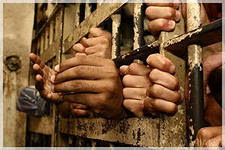
| A demonstration by the CJA |
Rare moments were recording recently when three
apparently antagonistic organisations agreed on an important national issue.
The Committee for Joint Action (CJA), Alliance
for Accountable Governance (AFAG) and the Socialist Forum of Ghana (SFG) all
said no to the proposed tariff increases for the utility companies.
At a stakeholders meeting on the 2013 tariff review
process, the spokespersons of the three organisation questioned the basis of
the proposed tariff adjustments.
They claimed that the financial difficulties
facing the Volta River Authority (VRA), the Ghana Grid Company (GRIDCO) and the
Electricity Company of Ghana (ECG) were the result of inefficiency and
corruption.
They insisted that the three utility companies
have not been able to address problems like poor response to complaints, lack
of proper maintenance of equipment and transmission lines and wastage.
The three organisation also insisted on value
for money as a basis for any future increase in electricity tariff.
Mr. Abu
Ramadam, who spoke for AFAG said the companies had failed to address problems
of in efficiency since the last tariff increases.
Mr. Kwasi Adu, Spokesperson of the CJA spoke
eloquently about transmission loses and said the benchmark of 21 per cent was
too high.
He alleged that the Auditor- General’s report
reveals that the ECG spends 60 per cent of its total income on salaries for
workers and management staff.
He said only 20 per cent of the ECG’s income is
spent on maintenance.
The agreement of the three groups is most
significant and should send a clear message to the Government that the people
of Ghana are united in their opposition to the proposed tariff increases.
The CJA
has already issued a statement condemning the proposed increases.
Editorial
WELL SAID!
Last week-end, President John
Dramani Mahama addressed senior citizens at an event to mark Republic Day.
The President directed that public officials who embezzle or misapply
state funds should be prosecuted to serve as a deterrent to others.
President Mahama also instructed that a special unit should be
established at the office of the Attorney- General to deal with such cases.
The Insight welcomes the directive
of the president to the extent that it will help check rampant corruption in
state institutions and free resources for national development.
It is our hope that the anti corruption drive will be taken seriously by
all individuals and institutions charged with that responsibility.
We are however deeply worried by the fact that although the 1992
constitution provides for the establishment of a Financial Tribunal to deal
with cases of embezzlement and misapplication of funds reported by the
Auditor-General, it has not been done.
The Insight calls on Parliament, the Chief Justice and the Executive to
act swiftly on the establishment of the Financial Tribunal.
Well said Mr. President but a lot more needs to be done.
FINANCING
AFRICA’S INTEGRATION
 |
| A Map of Africa |
The idea of innovative financing for organizations like the African Union
is not new as they have been ongoing since 2001. The actual idea emanated from
a summit in Lusaka, Zambia in 2001. In conceiving of the AU, the Heads of State
and Government of the AU appreciated the fact that they needed to pursue the
idea of a new source and mechanism to finance the AU.
In doing so, they realized that there were limitations to the existing financing mechanism. To this end, they authorized the Commission of the African Union to undertake studies, with the assistance of experts, to identify what one AU press release of December 2010 calls "alternative modalities of funding" the programmes, of the then-OAU.
In doing so, they realized that there were limitations to the existing financing mechanism. To this end, they authorized the Commission of the African Union to undertake studies, with the assistance of experts, to identify what one AU press release of December 2010 calls "alternative modalities of funding" the programmes, of the then-OAU.
"
Currently, the African Union funds
are predicated on two sources of financing: member states contributions and
partner's contributions. It is conceivable that the major constraint associated
with these two sources constrain the AU from implementing its integration
agenda. At no time has this become as important as now when the effects of the
2008 financial crisis are affecting Africa in different ways. As a consequence,
AU policymakers believe it is high time the AU got its act together by
implementing the decisions of the Lusaka Summit.
Appeal
The Lusaka Appeal is contained in
Decision AHG/Dec.160(XXXVII), which reads as follows: (1 )The Conference
authorizes the Secretary-General to: (i)Explore the possibility of mobilizing
extra-budgetary contributions from member states, OAU partners and others:
(ii)Undertake studies, with the assistance of experts, to identify alternative modalities of funding the activities and programmes of
the OAU, bearing in mind that the Union cannot operate on the basis of assessed contributions from member states only, and to
make appropriate recommendations thereon." It goes on to list challenges, which include funding that fluctuates and is "paltry", funding sources that are limited and "are not diversified and remain permanently uncertain", the "largely inadequate" and "unstable" funds that are given to the AU, and which are not given "in real-rime".
(ii)Undertake studies, with the assistance of experts, to identify alternative modalities of funding the activities and programmes of
the OAU, bearing in mind that the Union cannot operate on the basis of assessed contributions from member states only, and to
make appropriate recommendations thereon." It goes on to list challenges, which include funding that fluctuates and is "paltry", funding sources that are limited and "are not diversified and remain permanently uncertain", the "largely inadequate" and "unstable" funds that are given to the AU, and which are not given "in real-rime".
It finally concludes that "the
one and only solution allowing Africa to meet all these challenges lie in Africa
making avail- able to the AU and its organs, their own resources that are
stable, substantial and more or less permanent; and hence the Lusaka Appeal of
July 2001
As one might expect, the
implementation of the Lusaka Appeal has been fraught with challenges, which
include, for example, country delegations. Most often than not, the experts
working on the Appeal are not the same ones from one meeting to another; and
the government changes in countries also change with every government,
inevitably taking with them vital information that would have been necessary as
input for the implementation.
This trend has inevitably derailed
the "virtually-permanent achievements" of previous meetings, with
each new delegation wanting to make its mark on the proposed instruments.
The encouraging news is that a decision
was adopted at the l Sth ordinary sessions of the Assembly of the AU in
Kampala, Uganda, in July 2010, and that
decision reflects the firm political will of the Heads of State and Government to finalize the issue. Furthermore, the political will expressed by Heads of State and Government in the Kampala Decision invites experts as well as the ministers, to truly address the issue and make clear, con-
sensual and concrete recommendations very much-needed for innovative financing to make the impact it so needs for African integration.
decision reflects the firm political will of the Heads of State and Government to finalize the issue. Furthermore, the political will expressed by Heads of State and Government in the Kampala Decision invites experts as well as the ministers, to truly address the issue and make clear, con-
sensual and concrete recommendations very much-needed for innovative financing to make the impact it so needs for African integration.
Contention
On the back of this critical debate
is a source of contention mong policy-makers over how the AU sources its funds.
In an October 2012 report entitled "A Stream cannot rise above its source:
Financing of Africa's Regional Integration", the five-page analysis
(written by the Executive Director of the CCP-AU Janah Ncube and Policy Analyst
with the Open Society Foundation's AU Advocacy Program Maureen Akena), offered
a fairly succinct view of what is happening with the African Union's finances;
what are the challenges to the financing, and what models exist that can inform
a change.
The July 2012 summit approved the 2013 budget of the AU, which totals
USD277 million, with contributions as follows: the AU member states pay 44% of
the budget (122.8 million), with donors paying no less than 56% of the budget,
or 155.3
million. That said, the total
operational cost of USD 117.4 million is covered by the Member states. With
respect to the pro- grams budget, member states pay 3%, with the donors footing
a whopping 97% of the budget.
According to the authors, program
costs for key institutions, such as the Pan African Parliament(PAP); the Human
Rights Commission (ACHPR); the African Court (AfCHPR); NEPAD Planning
Commission Agency (NPCA); the Commission on International Law(AUCIL); the
Anti-Corruption Board
and the Committee on the Rights and Welfare of Children (ACRWC) are all paid for by external donors! There is no allocation at all from member states towards the latter, which has the mandate to promote and protect the rights of children in Africa. There is no gainsaying "he who pays the piper calls the tune", which is the appropriate sub-heading for the section in the report explaining the dominance of donors in the operationalisation of the AU's work. The
report states "while it is commendable that the operational costs are wholly covered by AU member states, it is quite disturbing that the integration and development agenda for this continent is being paid for by foreign resources."
and the Committee on the Rights and Welfare of Children (ACRWC) are all paid for by external donors! There is no allocation at all from member states towards the latter, which has the mandate to promote and protect the rights of children in Africa. There is no gainsaying "he who pays the piper calls the tune", which is the appropriate sub-heading for the section in the report explaining the dominance of donors in the operationalisation of the AU's work. The
report states "while it is commendable that the operational costs are wholly covered by AU member states, it is quite disturbing that the integration and development agenda for this continent is being paid for by foreign resources."
Inevitably, it can only prompt the
question of who really is in control of the AU.
Even if donors, because of the global economic downturn, were able to come up with 42% of what was expected from them in mid-2012, does that substantial sum not lead the AU member states beholden to them
Even if donors, because of the global economic downturn, were able to come up with 42% of what was expected from them in mid-2012, does that substantial sum not lead the AU member states beholden to them
Bottom line is that the AU often has
to wait on external funding before being able to respond to conflicts that
require peace- keeping missions. Given all that is happening in Mali; Somalia;
Eastern DRC and Guinea Bissau, it is very likely most of the funding will from
donors. The report could not have put it better when it states "we cannot
champion our African solutions when we can't pay for them." While it may
seem common-sense for some, it seems not-so-
much for African policymakers who often go, cap-in-hand, to donors and the West to ask for technology transfer and "assistance."
much for African policymakers who often go, cap-in-hand, to donors and the West to ask for technology transfer and "assistance."
Before we answer that, it is important to first explain who is actually
paying the funds at the AU. The truth is both shocking and funny: five
countries-paying $16million each-pay 66% of the AU member states contribution.
These are South Africa; Nigeria; Libya; Egypt; and Algeria. This inevitably
means that the 34% of AU member states contributions are paid by a shocking and
whopping 48 African countries.
The report maintains that by mid-
2012, only 11(20%) of the 54 member states had fully-paid their contributions;
with 19 countries owing for the current year and 24(44%) having arrears from
previous years.
With these execrable statistics, how
on Earth do African policymakers expect the African Union to operate? These are
fundamental questions that need answering. The regional economic communities
seem to offer an answer.
Sources
The original study by the Commission
of the African Union proposed no less than eight scenarios of innovative
financing sources. These sources are to be structured around: (a) tax on
imports; (b)tax on revenue from hydrocarbon exports; (c)tax on insurance
premiums; (d)levy on airline tickets; (e) involvement of the private sector
through sponsorship and other forms of support; (f) the sale of items and other products carrying the African Union
symbol. However, as a consequence of a series of expert meetings and
ministerial conferences, the Commission's choice was limited to the following
main components or
instruments: (i) levy on imports from the rest of the world; (ii)levy on airline tickets; and (iii)levy on insurance policies.
instruments: (i) levy on imports from the rest of the world; (ii)levy on airline tickets; and (iii)levy on insurance policies.
In order to obtain a greater insight
into how these three instruments are used in levying taxes for some of the AU's
regional economic communities, we need to turn to the cases of the Economic
Community of Central African States(ECCAS); UEMOA/CEMAC; and ECOWAS.
Truth be told, ECOWAS, UEMOA, ECCAS
and CEMAC are the only RECs that have been implementing the levy on imports
from non-member countries with some degree of success
In ECCAS, the levy is called the
"cornmunity contribution for integration (CCI)*. Consumer goods,
originating from third countries, imported by member states are subject to the
CCL Products that are excluded from the field of taxation are products
originating from the Community and imported goods under "suspensive
customs regimes".
These amounts collected under the CCI are deposited into
an account opened on behalf of ECCAS at the Central Bank of each of the 15
member countries of ECCAS. In addition, a central account for ECCAS is also
opened at the Central Bank of the country, which hosts the headquarters - as in
the case of the cash account in Libreville, Gabon.
On the plus side, if the CCI is well- implemented and all
countries have a surplus in the ECCAS account opened in their central bank, it
is the entire region that is strengthened.
According to the AU's "Bulletin on Fridays",
these two organizations implement fully the Community levy system.
One of the major reasons for this is because they are both customs unions, which facilitates the implementation of this measure.
The levy rate in UEMOA is 1%. As a consequence, the levy
rate in the member countries of UEMOA is 1.5%, broken down as follows: (t) 1 % for UEMOA; (ii)O.S% for ECOWAS
countries.
In ECOWAS, as in ECCAS, the community levy is placed on
taxable value of goods imported into the Community from third countries and
marketed for consumption. The following are exempt from the community levy:
(i)aid, grants and non- repayable subsidies for a state, public corporations
and state-approved charities; (ii)goods imported from third countries through
financing provided by foreign partners, subject to a provision exempting such
products from all tax levies; (iii) good imported by firms under the existing tax system at the date of entry into force of this Protocol; (iv) the goods having been charged the community levy under any previous tax regime.
products from all tax levies; (iii) good imported by firms under the existing tax system at the date of entry into force of this Protocol; (iv) the goods having been charged the community levy under any previous tax regime.
ECOWAS Community levies are predicated on: (i) CIF (cost
insurance freight) value at the port of landing for imports by sea; (ii ) the CIF value of imports by land at
the point of entry into the customs territory of the Community; (iii)the
customs value at the port of landing (APOD) for imports by air; (iv)the market
price list of the respective goods.
Based on the import value of imported goods,
the customs requires the importer (who is also from the private sector) to
issue two cheques: one in favour of UEMOA(l ss)
and the second in favour of ECOWAS(O.S%). The Customs Services in turn
deposit the cheques received from importers to the accounts of UEMOA and ECOWAS,
which have been opened at the Central Bank of each state.
Finally, in ECOWAS, it is important to know how these funds are used.
First, the funds go to the regular budget of the Community and its
institutions', such as the West African Monetary Institute and the ECOWAS
Regulatory Electricity Authority (ERERA). The funds exclude the budget of the Cooperation,
Compensation and Development Fund; (ii)the budget to compensate revenue losses
suffered due to trade liberalization; (iii) the
financing of development activities; and (iv) any other allocation decided by
the Authority or the Council including the capital increase of the ECOWAS Fund.
Tax
Even after all this good news on financing African integration, the
story is not quite over - as exemplified by discussions on more levies. In this
specific proposal, which is also known as "a citizen tax", the idea
is to get this levy to involve "all African citizens" through
insurance subscriptions: automobile and real estate. Heath insurance is
exempted.
The "solidarity tax" is so-named because most of the tax is
supposed to come from G8 and G20, and can be applied to flights leaving Africa
and with destinations in Africa; flights departing from Africa with
destinations outside Africa, with the Commission of the African Union proposing
US$2 for short distances, and US$S for long distances.
Truth be told, ECOWAS member state Senegal has been doing this for a
while. In the country, the tax applies only to flights departing from airports
in the country.
Collection of the levy is done through LATA for all airlines associated with it. At its monthly payment operations, LATA pays the share due Senegal into a bank account (escrow account) held with the BNP Paribas The bottom line is that even as cheap and conditional loans may have dried up from the Breton Woods Institutions, through the Lome-based ECOWAS Bank for Investment and Development (EBID), West African countries, can easily obtain funding to finance both its private and public sector initiatives.
Collection of the levy is done through LATA for all airlines associated with it. At its monthly payment operations, LATA pays the share due Senegal into a bank account (escrow account) held with the BNP Paribas The bottom line is that even as cheap and conditional loans may have dried up from the Breton Woods Institutions, through the Lome-based ECOWAS Bank for Investment and Development (EBID), West African countries, can easily obtain funding to finance both its private and public sector initiatives.
the public-sector-focused ECOWAS Regional Development Fund (ERDF) and
the private-sector-led ECOWAS Regional Investment Bank (ERIB has), EBID remains
the financing bank of NEP AD projects in the region. In so many ways, it is the
European Investment Bank counterpart in the ECOWAS sub-region, and has been
around since the inception of ECOWAS in 1975.
Observers of the sub-region believe EBID has, in many respects, been a
trail- blazer in the sub-region in the way it has maintained a consistent brief
of fostering greater integration in the sub-region among its member states -
especially in the light of the conflicts that mired the sub-region in the early
nineties. So focused has it been in facilitating sub-regional integration that
in 2004, in conjunction with the African Development Bank, it set up a Conflict
Prevention Fund, which is indeed managed by EBID.
Levy
Meanwhile, ECOWAS has recently agreed on the creation of a 1.5 per cent
Community Integration Levy which scope and operationalisation would be the
subject of further regional reflection as part of the mechanisms to enable the
region cope with the challenges of implementation of the new tariff regime.
According to Ecowas, the levy will seek to replace the two existing
community levy regimes in the region comprising the ECOWAS Community levy and
the counterpart Community Solidarity levy for the UEMOA.
In conclusion, when one reflects on this, can one not really say we need
to continue depending on donors, or is it perhaps not time to re-consider that
fallacy of needing an "aid-exit" plan to woo investors and so-called
FDI? If African policy-makers can get past this mindset - and it is possible
for the sub-region to do this, as exemplified by the instrumental role the
Ecowas Bank for Investment and Development is playing in the sub-region - then
the sky will certainly offer itself as the proverbial limit on seed funding for
continuing the narrative of African integration which continues to be written
summit after summit.
* Emmanuel Bensah is Communications
Officer, TWN-Africa.
Officer, TWN-Africa.
Top Vatican bank officials resign

The
headquarters of the Institute for Religious Works (IOR), also known as the
Vatican Bank (Right)
The director and deputy director of the Vatican
Bank have resigned after a senior Italian priest with close ties to the bank
was arrested on suspicion of fraud and corruption.
In a statement issued on Monday, the
Vatican announced that the bank's director, Paolo Cipriani, and his deputy,
Massimo Tulli, had stepped down.
On Friday, Italian authorities arrested
a senior cleric known as Nunzio Scarano after an investigation of the bank,
also known as the Institute for Works of Religion (IOR), produced evidence
showing it may have been involved in an international fraud scheme.
Scarano was arrested along with
Giovanni Maria Zito, a former Italian intelligence agent, and Giovanni Carinzo,
a financial broker.
Prosecutors say Scarano paid Zito
400,000 euros ($523,000) to transport 20 million euros in cash from Switzerland
to Italy onboard Zito’s private jet.
According to reports, Cipriani and
Tulli assisted Scarano and provided him with the required bank approval to
transfer the large amounts of cash.
Vatican spokesman Federico Lombardi
said Scarano was suspended from his accounting post at the Vatican central
bank’s Administration of the Patrimony of the Apostolic See (APSA) nearly a
month ago “after his superiors learnt about an investigation into his
activities.”
The Italian daily La Repubblica reported
that Scarano is also under investigation in the city of Salerno on suspicion of
money laundering.
Only priests, religious, Catholic
institutions, employees of the Vatican City State, and diplomats accredited to
the Holy See are allowed to have accounts at the IOR, but Italian politicians
and organized crime figures allegedly also have accounts at the bank.
Over the years, the Vatican Bank has
been involved in a series of scandals.
The bank's governor in the 1980s,
Archbishop Paul Marcinkus, was indicted over his involvement with the collapse
of Italy's largest private bank, Banco Ambrosiano, which was owned in part by
the Vatican Bank.
In the aftermath of the scandal, the
chairman of the bank, Roberto Calvi, was found hanged under Blackfriars Bridge
in London in 1982. Calvi was known as God's Banker because of his close ties to
the Vatican. The death was initially ruled a suicide but later prosecuted as a
murder.
The activities of the infamous P2
Masonic lodge were brought out of the shadows by the collapse of Banco
Ambrosiano. Some investigative journalists suspected that some of the plundered
funds went to P2 or to its members.
Propaganda Due, or P2, was a Masonic
lodge operating under the jurisdiction of the Grand Orient of Italy from 1945
to 1976. P2 was sometimes referred to as a "state within a state" or
a "shadow government."

By Akin Oyebode
Introduction
May
I begin by observing the fact of inevitability of law in the human condition.
Making such an assertion before a gathering such as this might amount to
preaching before the converted. Yet, the fact cannot be over-stated, especially
at a time like this when there are lingering doubts regarding the place and
role of law in a situation of anomie, when the jury seems to be out regarding
whether or not Nigeria had become a failed or failing state.
Nigeria is currently at a cross-roads when a
large majority of our compatriots have almost totally given up on the law as an
instrument of social control, means of conflict resolution and regulator of
human interaction. At a time like this when there is general disillusionment, mass
self-doubt and growing resort to self-help, any profession of determination by
government to contain the ogre of corruption is apt to be met with loud yawns
of disbelief and hopelessness from a people who now believe that only the
Almighty can come to the rescue of the nation.
Yet, we lawyers are something of miracle-workers
who believe there should always be a role for the law however seemingly
impossible the situation.
It is against this backdrop that it is
intended to interrogate the role of law within the miasma of corruption in
which the country is currently luxuriating with a view to elaborating a
prognostication of what awaits the nation in the immediate future and beyond.
Accordingly, it is intended to re-examine the role of law in human affairs
generally before assessing Nigeria’s score card as far as corruption is
concerned and reach some conclusion regarding the fate of the country except
and unless drastic decisions are taken regarding what has been the most
virulent threat to the nation’s survival.
The
Role of Law as a Regulatory Mechanism
According to Lon Fuller, the law exists,
essentially as a facilitator of human interaction. In other words, law is not
an end in itself but a means to an end. Whereas law is, in the language of
Roscoe Pound, a balancer of conflicting interests and potent instrument of
social engineering, many continue to perceive law in the context of maintenance
of social control, stability and order without which it is impossible for any
society to make progress.
Indeed so critical is law that it is often
contemplated as the alter ego of society itself. The motto of
some law societies in our universities is derived from the Roman maxim, “Ubi
societas, ibi jus,” a fact which is not lost on even laymen who
recognize the ubiquity and inevitability of law in the scheme of things.
Accordingly, it is clear to all and sundry that
law is indeed the last bus stop before anarchy and chaos set in. The rule of
law is eminently preferable to the rule of man and that of force which heralds
the descent of society into the rule of the jungle where Hobbes had reminded
us, life was solitary, brutish, nasty and short, with man engaged in a war with
other men, operating in a situation where might was right, survival of the
fittest prevailed, there was certainty of law as well as an impartial
arbiter.
Accordingly, it was the arbitrariness of man in
a state of nature which compelled him to transit to a state of civil society of
known and certain laws, administered by impartial judges whose powers were not
absolute but regulated and delimited by the social contract. When this
situation becomes adumbrated by separation of powers, checks and balances,
equality before the law and due process of law, human beings enter the state of
civil society and the rule of law.
The beauty of this situation is that it enables
social strife to be avoided while conflicts are channeled away from the streets
to the peace and serenity of the court-house, where matters are handled by
judges sworn to do justice to all manner of men, without fear, affection or
ill-will, thereby ensuring satisfaction to litigants and respite as well as
catharsis to the rest of society.
The
Ogre of Corruption and Nigeria’s Well-being
Nigeria’s score card in relation to corruption
is proverbial. We have consistently maintained a leadership position among the
world’s most decadent as far as corruption was concerned. For example, of the
176 countries surveyed last year, Transparency International placed Nigeria at
139. In fact, it was not too long ago that a prominent member of this Branch,
the inimitable Femi Falana, SAN exclaimed in bewilderment that corruption had
become the fundamental objective and directive principle of state policy in
this country!
If in the 1960’s, unjust enrichment of 100,000
pounds by a government minister was considered by him “chicken feed,” a decade
later when the Scania scandal broke, one of the high profile beneficiaries
could express surprise that anyone was worried over the matter, more so, as he
had paid tax on his unearned income! By the time of the Siemens, Halliburton,
Keith Hughes and other scams, the Nigerian ruling class had completely parted
company with any sense of shame by warmly embracing what Ted Heath, the late
British Prime Minister once called “the ugly and unacceptable face of
capitalism.”
Today, the situation could not be worse. Not
only is nothing beyond Nigeria’s plutocrats who don’t bat an eyelid when
running away with the questionable and extortionate so-called fuel subsidy, or
pension funds that could have alleviated the suffering of those who had
invested the better part of their lives serving the nation or ensuring that
appointments, promotions and other preferment, more often than not, come except
and unless such was accompanied with payment of fat bribes. Indeed things had
gotten so sordid that the British prosecutor of one of our country’s most
brazen looters of our patrimony could wonder aloud at how it was possible in
the country for a common thief to secure the key to the Government House…
It is clearly beyond question that corruption
or, indeed, impunity now constitutes a clear and present danger to the survival
of this country. To the extent that criminal law is a mirror of the tolerance
level of a people, to that extent can the observation be made that corruption
appears unstoppable in Nigeria today arising from the complicity and duplicity
of the powers-that-be.
Not only are obviously corrupt individuals
flaunting their ill-gotten wealth shamelessly before their less opportune compatriots,
they are often rewarded with national awards, chieftaincy titles, honorary
degrees, or allowed to occupy front-row pews in churches or celebrated in
turbanning ceremonies and frequently requested to chair wedding receptions,
they even have the effrontery to pontificate on moral virtues and demand of
their incredulous fellow countrymen and women to make necessary sacrifice
towards rescuing the nation! We are now faced with the situation, as our people
say, of a certified rogues being appointed society’s treasurers!
Nevertheless, a gathering such as this should
not feel offended if one was to ask, what has been the response of law to this
debilitating and depressing situation? Afterall, lawyers are wont to extol the
overarching importance and role of the law in providing answers to critical
issues confronting society.
Curbing
Corruption: The Success and Failure of the Law
Perhaps, it is necessary to observe that even
our colonially-begotten criminal legislation contained provisions deprecating
official corruption, apparently in a bid to teach the natives one or two things
about propriety. However, it is the post-colonial effort to reduce, if not, in
fact, eliminate the cankerworm of corruption that here calls for interrogation.
Our military conquistadores who had
brandished all manner of reformist agenda when they came on board did not find
it expedient to overhaul the existing generally ineffective and ineffectual
legal machinery on corruption, limiting themselves to confiscation by decree of
ill-gotten wealth of some politicians or sentencing them to long incarceration
through military tribunals. Paradoxically, however, it was an ex-military El
Caudillo that thought it fit to engineer the promulgation of ostensibly
anti-corruption laws as well as create institutions under the guise of the
Independent Corrupt Practices and Other Related Offences Commission (ICPC) Act,
the Economic and Financial Crimes Commission (EFCC) Act, the Money Laundering
Prohibition Act.
All of these laws, coupled with the Code
of Conduct provisions of the 1999 Constitution could well have been a
fool-proof legal framework for prosecuting the much-trumpeted war against
corruption. However, all that came to naught as a result of selective
enforcement, double standards, ad hominem application and
other lapses that enabled fat camels to pass through the eye of the Nigerian
needle.
What is more, the inclusion of new-fangled
notions of plea bargaining tagged “compounding” enabled some corrupt
personalities to get off with slaps on the wrists to the chagrin and
discomfiture of helpless Nigerian on-lookers who were earnestly looking forward
to inflicting long terms of imprisonment on those who had frittered away with
public resources which could have gone a long way in alleviating their suffering.
The sense of catharsis which severe penalties for corruption would have
engendered left the masses with discomfiture, ending up by seeking solace in
the eternal prayer of the distraught and helpless: “God dey!”
They watched in utter disgust as privileged
accused persons hired the most celebrated legal practitioners, who exploited
every technicality in the book to either secure injunctions against trial of
these selfsame individuals or argued against admissibility of electronically
generated evidence or, in the final analysis, won for their clients mere fines
or unconscionably disproportionate and symbolic terms of imprisonment, with
little or no regard for the signals such cozy treatment of looters of the
public treasury was sending to society at large.
In a country where petty thieves are visited
upon with the severest punishment, it is quite bewildering that the ruling
class can so brazenly display its solidarity with its members who had been
found to commit breach of the Eleventh Commandment of bourgeoisdom: “Thou shall
not be caught”! And, if all else failed, some of the most notorious members of
the nation’s rogues’ gallery could rest assured of having bestowed on them an
amnesty or prerogative of mercy, courtesy of even the highest levels of government…
The level of corruption and impropriety among
some judicial officers and law-enforcement officers as revealed in recent times
is such as to make one wonder if gold rusts, what should be expected of iron.
For, there is now wide suspicion that the figurine of Themis that adorns
our court-houses is really a sham as the Lady of Justice herself can actually
be “seen” and,persuaded to either peep though her blindfold or even totally
remove it and tilt the scales of justice in favour of a litigant, if only the
price was right! Indeed so sordid is the state of affairs in Nigeria today that
one can only pose the question Juvenal had posed many centuries ago: Quis
custodiet ipso custodies?
Corruption
and the Future of Nigeria
Today, Nigeria is at a cross-roads. Buffeted on
all sides by innumerable political crises, socio-economic downturn, terrorism,
kidnapping, ethnic conflict, instability, incompetence bordering on leadership
failure, fear and collective self-doubt, the portents could not be worse for our
dear country. When to all that is added ravaging corruption and loss of shame
by those who pose as the nation’s ruling class, it becomes clear that the
country has to stem the tide of imminent collapse by overhauling its legal
system, especially sanctions prescribed for corruption.
Admittedly severity of sanctions is not as
critical as certainty of punishment. Nevertheless, the slip-shod manner we have
hitherto handled the poison that corruption represents to our collective
well-being suggests that a new way has to be found to contain the ogre. We
might need to borrow a leaf from other jurisdictions like China and Singapore
in order to put a cap on the high incidence of corruption in this country.
Even if many might be averse to the suggestion
of treating corruption with execution by the firing squad, the time is now ripe
to consider incarceration for life for those who commit vile and venal crimes
of stealing from the public purse. Besides, there is a crying need to send the
right signals to the rest of the population and the international community to
the effect that we are indeed a self-respecting people, wedded to zero
tolerance for corruption, opposed to impunity and dedicated to the promotion of
due process and equality before the law.
Pursuant to the necessity of creating a better
society, it is high time we jettisoned an ill-digested notion of plea
bargaining and exact severe penalty for corruption, an infraction that
approximates a crime against humanity, with all consequences arising therefrom.
We cannot continue to accept a mockery of our national values through the
actions and attitudes of a few vermins who would stop at nothing in
appropriating to themselves what constitutes our national patrimony.
If we are truly intent on securing respect for
our flag, passport and good name, we must do whatever needs to be done to join
the rest of humanity by evincing the will not to condone corruption. Failure to
take immediate action along these lines would only result in our being
grudgingly tolerated by the rest of the world in spite of our much-vaunted
status of “Giant of Africa” with a manifest destiny to lead Africa and the
entire black race.
Big Barack is
watching you!
 |
| Hussein Obama listens to your phone calls |
Recent revelations
by former CIA employee Edward Snowden have shown a spotlight on how immodest
the surveillance encroachments really are. Not only has the US National
Security Agency (NSA) amassed a huge array of data from its spying operations
around the world, but also it has intercepted telephone and internet
communications between citizens within its own borders.
The NSA
telecommunications intercept program known by the acronym PRISM, has sparked
mild-mannered expressions of outrage by members of the European Union amid
ameliorating statements concerning the member-states relations with the United
States.
One US lawmaker,
Representative Loretta Sanchez (D-CA), said that she felt the recent
disclosures of NSA spying by Snowden only revealed the “tip of the iceberg.”
PRISM is just one of many US espionage operations.
There is a plethora of other programs
encompassing surveillance and the speedy, efficient analyses of the enormous
volumes of data collected by all the watchful cameras, communication taps and
records searches, virtually all of them classified and beyond the reach of
ordinary US citizens. Likewise, the cost to Americans for this extensive
espionage encroachment, consisting of the National Intelligence Program (NIP)
and the Military Intelligence Program (MIP), is also classified but is
estimated at over USD80 billion of which only USD48.2 billion is acknowledged
by US officials.
Obama acknowledged,
“There are a whole range of programs that have been classified because -- when
it comes to, for example, fighting terror, our goal is to stop folks from doing
us harm.”
The US Commander in
Chief justified the need for utmost secrecy in these programs to keep “the
people who are trying to do us harm” from being “able to get around our
preventive measures. That's why these things are classified.”
What Obama did not
acknowledge is that the secretive so-called intelligence community (IC) is so
vast and interlaced among numerous government agencies and private contractors
that its true extent and costs are virtually unknown.
With the majority
of today’s threats shifting from the physical world to cyberspace, the US is
investing heavily in cutting-edge computer technologies. Two of the buzzwords
heard repeatedly in connection with super-intensive intelligence collecting are
“big data” and “cloud computing.” Big data refers to the massive amounts of
data obtained from monitoring email and telephone conversations, data mining
records, biometric identification and video surveillance cameras, while cloud
computing refers to an information processing system consisting of a large
number of remote computers linked together on a network as opposed to being on
a local server.
The main US spy
organization, the Central Intelligence Agency (CIA), is extremely interested in
big data and cloud computing. “Cloud computing has emerged to enable us to
deliver capabilities we weren't able to deliver before at a scale and price and
agility level we were never able to do before,” explained CIA Chief Information
Officer Gus Hunt, and referring to data analysis added, “I have a petascale
problem and need a petascale solution.” Petascale refers to computing that
takes place on the scale of one quadrillion operations per second. These
supercomputers are roughly a thousand times faster than today’s ordinary
terascale computers but the push is on to develop exascale machines that would
be one thousand times even faster.
Briefly, here are
just a few selections from the alphabet soup of current US high-tech
intelligence-focused research programs addressing issues related to so-called
“big data:”
ADAMS (Anomaly Detection at
Multiple Scales) - Examines anomalies in massive data sets with applications to
detection of “insider threats,” involving anomalous behavior by individuals.
CINDER (Cyber-Insider Threat) -
Detects activities and events consistent with cyber espionage in military
computer networks.
PROCEED(Programming Computation on Encrypted Data) - Develops methods to process encrypted data without the need for decoding prior to processing.
PROCEED(Programming Computation on Encrypted Data) - Develops methods to process encrypted data without the need for decoding prior to processing.
VIRAT(Video and
Image Retrieval and Analysis Tool) - Methods for effectively processing vast
amounts of video data for use by military analysts.
CI-BER (Cyber-infrastructure for a
Billion Electronic Records) - Test-bed for a multi-agency cyber infrastructure
for ultra-large databases.
BIGDATA (Core Techniques and
Technologies for Advancing Big Data Science & Engineering) - Program to
advance methods of extracting and analyzing information in ultra-large data sets.
As the US
intelligence infrastructure expands exponentially and ominously, Obama has
assured Americans that they need not be concerned over the resulting massive
intrusion into their lives. Insisting that he is not saying, “Trust me; we’re
doing the right thing; we know who the bad guys are,” he points out that the
surveillance programs have “congressional oversight and judicial oversight.”
However, Obama concedes that if the American people neither trust the chief
executive, nor Congress nor the judiciary “to make sure that we’re abiding by
the Constitution, due process and rule of law, then we’re going to have some
problems here.”
Surprisingly, most
Americans do not seem to have a problem with the “modest encroachment” that the
numerous surveillance programs make upon their privacy. One scholar, Simon
Chesterman, Dean of the National University of Singapore Faculty of Law,
suggested that citizens are more than willing to trade off a measure of their
civil liberties for assurances of additional security, something he refers to
as a “new social contract.” As a result, protests against increased
governmental snooping “are doomed because the modern threats that we are facing
increasingly require governments to collect information on us. Governments are
increasingly able to collect that information on us-that's the technological
angle, and we as citizens increasingly accept, or at least tacitly accept, that
they will collect that information.”
Chesterman
stressed, “One of the striking things over the past decade in the United States
was the relative passivity of many people in the face of very intrusive
government powers.”
For his part,
Obama, by suggesting, “that there are some tradeoffs involved” between
government intrusion into the lives of US citizens and security, has reversed
himself from his previous position when sworn as president for his first term.
Not merely expressing “healthy skepticism”
but out rightly rejecting such a tradeoff in 2009, the new US president, in his
address upon taking the oath of office, declared, “As for our common defense,
we reject as false the choice between our safety and our ideals. ... Those
ideals still light the world, and we will not give them up for expedience
sake.” Now, in 2013, the above-mentioned ideals have been clearly sacrificed on
the altar of national security for the expediency of intelligence gathering by
the ever-expanding US surveillance system.
Oddly enough,
across-the-board budget cuts known as sequestration may finally be putting the
brakes on the global reach of US intelligence-gathering capabilities. In recent
testimony before the US House Permanent Select Committee on Intelligence, James
R. Clapper, Director of National Intelligence, stated that the National
Intelligence Program (NIP), which spans six cabinet level departments and two
independent agencies, faces mandatory budget cuts that “will reduce human
technical and counterintelligence operations, resulting in fewer collection
opportunities, which increases the risk of strategic surprise.”
Forebodingly,
Clapper predicted, “Our cyber efforts will be impacted. Critical analysis and
tools will be cut back. We'll reduce global coverage and may risk missing the
early signs of a threat. ...Virtually all of the 39 major systems acquisitions
across the intelligence community will be wounded.”
Emphasizing the
need to avoid an intelligence crisis such as the one that occurred after the
collapse of the Soviet Union when the US intelligence community suffered a 23%
cutback, Clapper exclaimed, “I do not recall a period in which we've confronted
a more diverse array of threats, crises and challenges around the world.” After
listing potential threats against US interests coming from within Egypt,
Tunisia, Yemen, Libya, Syria, Mali, North Korea, Iran, Iraq, Sudan, Somalia,
Nigeria, Afghanistan, Pakistan, China, Russia and Venezuela, the NIP director
warned, “In these and other regions of the world, extremists can take advantage
of diminished counterterrorism capabilities,” in an obvious appeal to avoid the
impending budget axe.
Clapper even
pointed an accusatory finger at Islam, stating that “Islamic actors have been
the chief beneficiaries of the political openings, and Islamist parties ...
will probably solidify their influence this year.”
However, contrary
to his statement and US espionage policies, Islam warns us not to spy and, in
most cases, to avoid suspicion. The Holy Qur’an states, “O you who believe,
avoid most suspicion, for surely suspicion in some cases is a sin, and do not
spy” (Surat al-Hujurat 49:12).
In fact, Imam Ali
(PBUH) advised against suspicion, saying, “Justify your brother's action in the
best way unless you know otherwise; and do not suspect your brother for what he
says while you can interpret it as good.”
Nevertheless, in
spite of the sequestration funding reductions, the US continues to spy on
people in almost every country around the world, something which former US vice
president Dick Cheney defends, insisting that these surveillance operations
have “saved lives and keep us free from other attacks.”
The NSA
whistleblower himself, Edward Snowden, stated emphatically, “The NSA has built
an infrastructure that allows it to intercept almost everything. With this
capability, the vast majority of human communications are automatically ingested
without targeting. ... I don't want to live in a society that does these sorts
of things.” And neither does the author of this article.
How to identify CIA
limited hangout op?

The operations of secret intelligence agencies
aiming at the manipulation of public opinion generally involve a combination of
cynical deception with the pathetic gullibility of the targeted populations.
There is ample reason
to believe that the case of Edward Joseph Snowden fits into this pattern. We
are likely dealing here with a limited hangout operation, in which carefully
selected and falsified documents and other materials are deliberately revealed
by an insider who pretends to be a fugitive rebelling against the excesses of
some oppressive or dangerous government agency.
But the revelations
turn out to have been prepared with a view to shaping the public consciousness
in a way which is advantageous to the intelligence agency involved. At the same
time, gullible young people can be duped into supporting a personality cult of
the leaker, more commonly referred to as a “whistleblower.” A further variation
on the theme can be the attempt of the sponsoring intelligence agency to
introduce their chosen conduit, now posing as a defector, into the intelligence
apparatus of a targeted foreign government. In this case, the leaker or
whistleblower attains the status of a triple agent.
Any attempt to educate
public opinion about the dynamics of limited hangout operations inevitably
collides with the residue left in the minds of millions by recent successful
examples of this technique. It will be hard for many to understand Snowden,
precisely because they will insist on seeing him as the latest courageous
example in a line of development which includes Daniel Ellsberg and Julian
Assange, both still viewed by large swaths of naïve opinion as authentic
challengers of oppressive government.
This is because the
landmark limited hangout operation at the beginning of the current post-Cold
War era was that of Daniel Ellsberg and the Pentagon papers, which laid the
groundwork for the CIA’s Watergate attack on the Nixon administration, and more
broadly, on the office of the presidency itself. More recently, we have had the
case of Assange and Wikileaks. Using these two cases primarily, we can develop
a simple typology of the limited hangout operation which can be of significant
value to those striving to avoid the role of useful idiots amidst the current
cascade of whistleblowers and limited hangout artists.
In this analysis, we
should also recall that limited hangouts have been around for a very long time.
In 1620 Fra Paolo Sarpi, the dominant figure of the Venetian intelligence
establishment of his time, advised the Venetian senate that the best way to
defeat anti-Venetian propaganda was indirectly. He recommended the method of
saying something good about a person or institution while pretending to say
something bad. An example might be criticizing a bloody dictator for beating
his dog - the real dimensions of his crimes are thus totally underplayed.
Limited hangout
artists are instant media darlings
The most obvious
characteristic of the limited hangout operative is that he or she immediately
becomes the darling of the controlled corporate media. In the case of Daniel
Ellsberg, his doctored set of Pentagon papers were published by the New York
Times, the Washington Post, the Boston Globe, and eventually by a consortium
totaling seventeen corporate newspapers. These press organs successfully argued
the case for publication all the way to the United States Supreme Court, where
they prevailed against the Nixon administration.
Needless to say,
surviving critics of the Warren Commission, and more recent veterans of the
9/11 truth movement, and know very well that this is emphatically not the
treatment reserved for messengers whose revelations are genuinely unwelcome to
the Wall Street centered US ruling class. These latter are more likely to be
slandered, vilified and dragged through the mud, or, even more likely, passed
over in complete silence and blacked out. In extreme cases, they can be
kidnapped, renditioned or liquidated.
Cass Sunstein present
at the creation of Wikileaks
As for Assange and
Wikileaks, the autumn 2010 document dump was farmed out in advance to five of
the most prestigious press organs in the world, including the New York Times,
the London Guardian, El Pais of Madrid, Der Spiegel of Hamburg, and Le Monde of
Paris. This was the Assange media cartel, made up of papers previously
specialized in discrediting 9/11 critics and doubters. But even before the
document dumps had begun, Wikileaks had received a preemptive endorsement from
none other than the notorious totalitarian Cass Sunstein, later an official of
the Obama White House, and today married to Samantha Power, the author of the
military coup that overthrew Mubarak and currently Obama’s pick for US
ambassador to the United Nations. Sunstein is infamous for his thesis that
government agencies should conduct covert operations using pseudo-independent
agents of influence for the “cognitive infiltration of extremist groups” -
meaning of those who reject in the establishment view of history and reality.
Sunstein’s article entitled “Brave New WikiWorld” was published in the
Washington Post of February 24, 2007, and touted the capabilities of Wikileaks
for the destabilization of China. Perhaps the point of Ed Snowden’s presence in
Hong Kong is to begin re-targeting these capabilities back towards the original
anti-Chinese plan.
Snowden has already become a media celebrity of
the first magnitude. His career was launched by the US left liberal Glenn
Greenwald, now writing for the London Guardian, which expresses the viewpoints
of the left wing of the British intelligence community. Thus, the current
scandal is very much Made in England, and may benefit from inputs from the
British GCHQ of Cheltenham, the Siamese twin of the NSA at Fort Meade,
Maryland. During the days of his media debut, it was not uncommon to see a
controlled press organ like CNN dedicating one third of every broadcast hour of
air time to the birth, life, and miracles of Ed Snowden.
Another suspicious and
tell-tale endorsement for Snowden comes from the former State Department public
diplomacy asset Norman Solomon. Interviewed on RT, Solomon warmly embraced the Snowden
Project and assured his viewers that the NSA material dished up by the Hong
Kong defector used reliable and authentic. Solomon was notorious ten years ago
as a determined enemy of 9/11 truth, acting as a border guard in favor of the
Bush administration/neocon theory of terrorism.
Limited hangouts
contain little that is new
Another important
feature of the limited hangout operation if that the revelations often contain
nothing new, but rather repackage old wine in new bottles. In the case of
Ellsberg’s Pentagon Papers, very little was revealed which was not already well
known to a reader of Le Monde or the dispatches of Agence France Presse. Only
those whose understanding of world affairs had been filtered through the
Associated Press, CBS News, the New York Times, and the Washington Post found
any of Ellsberg’s material a surprise.
Of course, there was method in Ellsberg’s madness. The Pentagon papers allegedly derived from an internal review of the decision-making processes leading to the Vietnam War, conducted after 1967-68 under the supervision of Morton Halperin and Leslie Gelb. Ellsberg, then a young RAND Corporation analyst and militant warmonger, was associated with this work. Upon examination, we find that the Pentagon papers tend to cover up such CIA crimes as the mass murder mandated under Operation Phoenix, and the massive CIA drug running associated with the proprietary airline Air America. Rather, when atrocities are in question, the US Army generally receives the blame.
Of course, there was method in Ellsberg’s madness. The Pentagon papers allegedly derived from an internal review of the decision-making processes leading to the Vietnam War, conducted after 1967-68 under the supervision of Morton Halperin and Leslie Gelb. Ellsberg, then a young RAND Corporation analyst and militant warmonger, was associated with this work. Upon examination, we find that the Pentagon papers tend to cover up such CIA crimes as the mass murder mandated under Operation Phoenix, and the massive CIA drug running associated with the proprietary airline Air America. Rather, when atrocities are in question, the US Army generally receives the blame.
Politicians in general, and President John F. Kennedy in particular, are
portrayed in a sinister light - one might say demonized. No insights whatever
into the Kennedy assassination are offered. This was a smelly concoction, and
it was not altogether excluded that the radicalized elements of the Vietnam era
might have carried the day in denouncing the entire package as a rather obvious
fabrication. But a clique around Noam Chomsky and Howard Zinn loudly intervened
to praise the quality of the exposé and to lionize Ellsberg personally as a new
culture hero for the Silent Generation. From that moment on, the careers of
Chomsky and Zinn soared. Pentagon papers skeptics, like the satirical comedian
Mort Sahl, a supporter of the Jim Garrison investigation in New Orleans and a critic
of the Warren Commission, faced the marginalization of their careers.
Notice also that the
careers of Morton Halperin and Leslie Gelb positively thrived after they
entrusted the Pentagon papers to Ellsberg, who revealed them. Ellsberg was put
on trial in 1973, but all charges were dismissed after several months because
of prosecutorial misconduct. Assange lived like a lord for many months in the
palatial country house of an admirer in the East of England, and is now holed
up in the Ecuadorian Embassy in London. He spent about 10 days in jail in
December 2010.
Assange first won credibility for Wikileaks with
some chum in the form of a shocking film showing a massacre perpetrated by US
forces in Iraq with the aid of drones. The massacre itself and the number of
victims were already well known, so Assange was adding only the graphic
emotional impact of witnessing the atrocity firsthand.
Limited hangouts
reveal nothing about big issues like JFK, 9/11
Over the past century,
there are certain large-scale covert operations which cast a long historical
shadow, determining to some extent the framework in which subsequent events
occur. These include the Sarajevo assassinations of 1914, the assassination of
Rasputin in late 1916, Mussolini’s 1922 march on Rome, Hitler’s seizure of
power in 1933, the assassination of French Foreign Minister Barthou in 1934,
the assassination of President Franklin D. Roosevelt in 1945, in 1963 Kennedy
assassination, and 9/11. A common feature of the limited hangout operations is that
they offer almost no insights into these landmark events.
In the Pentagon
Papers, the Kennedy assassination is virtually a nonexistent event about which
we learn nothing. As already noted, the principal supporters of Ellsberg were
figures like Chomsky, whose hostility to JFK and profound disinterest in
critiques of the Warren Commission were well-known. As for Assange, he rejects
any further clarification of 9/11. In July 2010, Assange told Matthew Bell of
the Belfast Telegraph: “I’m constantly annoyed that people are distracted by
false conspiracies such as 9/11, when all around we provide evidence of real
conspiracies, for war or mass financial fraud.” This is on top of Cass
Sunstein’s demand for active covert measures to suppress and disrupt inquiries
into operations like 9/11. Snowden’s key backers Glenn Greenwald and Norman
Solomon have both compiled impressive records of evasion on 9/11 truth, with
Greenwald specializing in the blowback theory.
The Damascus road
conversions of limited hangout figures
Daniel Ellsberg
started his career as a nuclear strategist of the Dr. Strangelove type working
for the RAND Corporation. He worked in the Pentagon as an aide to US Secretary
of Defense Robert McNamara. He then went to Vietnam, where he served as a State
Department civilian assistant to CIA General Edward Lansdale. In 1967, he was
back at RAND to begin the preparation of what would come to be known as the
Pentagon papers. Ellsberg has claimed that his Damascus Road conversion from
warmonger to peace angel occurred when he heard a speech from a prison-bound
draft resister at Haverford College in August 1969. After a mental breakdown,
Ellsberg began taking his classified documents to the office of Senator Edward
Kennedy and ultimately to the New York Times. Persons who believe this
fantastic story may be suffering from terminal gullibility.
In the case of
Assange, it is harder to identify such a moment of conversion. Assange spent
his childhood in the coils of MK Ultra, a complex of Anglo-American covert operations
designed to investigate and implement mind control through the use of
psychopharmaca and other means. Assange was a denizen of the Ann Hamilton-Byrne
cult, in which little children that were subjected to aversive therapy
involving LSD and other heavy-duty drugs.
Assange spent his formative years as
a wandering nomad with his mother incognito because of her involvement in a
custody dispute. The deracinated Assange lived in 50 different towns and
attended 37 different schools. By the age of 16, the young nihilist was active
as a computer hacker using the screen name “Mendax,” meaning quite simply “The
Liar.” (Assange’s clone Snowden uses the more marketable codename of “Verax,”
the truth teller.) Some of Assange’s first targets were Nortel and US Air Force
offices in the Pentagon. Assange’s chief mentor became John Young of Cryptome,
who in 2007 denounced Wikileaks as a CIA front.
Snowden’s story, as
widely reported, goes like this: he dropped out of high school and also dropped
out of a community college, but reportedly was nevertheless later able to
command a salary of between $120,000 and $200,000 per year; he claims this is
because he is a computer wizard. He enlisted in the US Army in May 2004, and
allegedly hoped to join the special forces and contribute to the fight for
freedom in Iraq. He then worked as a low-level security guard for the National
Security Agency, and then went on to computer security at the CIA, including a
posting under diplomatic cover in Switzerland. He moved on to work as a private
contractor for the NSA at a US military base in Japan. His last official job
was for the NSA at the Kunia Regional SIGINT Operations Center in Hawaii. In
May 2013, he is alleged to have been granted medical leave from the NSA in
Hawaii to get treatment for epilepsy. He fled to Hong Kong, and made his
revelations with the help of Greenwald and a documentary filmmaker Laura
Poitras. Snowden voted for the nominally anti-war, ultra-austerity
“libertarian” presidential candidate Ron Paul, and gave several hundred dollars
to Paul’s campaign.
Snowden, like
Ellsberg, thus started off as a warmonger but later became more concerned with
the excesses of the Leviathan state. Like Assange, he was psychologically
predisposed to the world of computers and cybernetics. The Damascus Road shift
from militarist to civil libertarian remains unexplained and highly suspicious.
Snowden is also
remarkable for the precision of his timing. His first revelations, open secrets
though they were, came on June 5, precisely today when the rebel fortress of
Qusayr was liberated by the Syrian army and Hezbollah. At this point, the
British and French governments were screaming at Obama that it was high time to
attack Syria. The appearance of Snowden’s somewhat faded material in the London
Guardian was the trigger for a firestorm of criticism against the Obama regime
by the feckless US left liberals, who were thus unwittingly greasing the skids
for a US slide into a general war in the Middle East. More recently, Snowden
came forward with allegations that the US and the British had eavesdropped on
participants in the meeting of the G-20 nations held in Britain four years ago.
This obviously put Obama on the defensive just as Cameron and Hollande were
twisting his arm to start the Syrian adventure. By attacking the British GCHQ
at Cheltenham, Britain’s equivalent to the NSA, perhaps Snowden was also
seeking to obfuscate the obvious British sponsorship of his revelations.
Stories about Anglo
Americans spying on high profile guests are as old as the hills, and have
included a British frogman who attempted an underwater investigation of the
Soviet cruiser that brought party leader N. S. Khrushchev for a visit in the
1950s. Snowden has also accused the NSA of hacking targets in China -- again,
surely no surprise to experienced observers, but guaranteed to increase
Sino-American tensions. As time passes, Snowden may emerge as more and more of
a provocateur between Washington and Beijing.
Limited hangouts
prepare large covert operations
Although, as we have
seen, limited hangouts rarely illuminate the landmark covert operations which
attempt to define an age, limited hangouts themselves do represent the
preparation for future covert operations.
In the case of the
Pentagon papers, this and other leaks during the Indo-Pakistani Tilt crisis
were cited by Henry Kissinger in his demand that President Richard Nixon take
countermeasures to restore the integrity of state secrets. Nixon foolishly
authorized the creation of a White House anti-leak operation known as the
Plumbers. The intelligence community made sure that the Plumbers operation was
staffed by their own provocateurs, people who never were loyal to Nixon but
rather took their orders from Langley. Here we find the already infamous CIA agent
Howard Hunt, the CIA communications expert James McCord, and the FBI operative
G. Gordon Liddy.
These provocateurs took special pains to get arrested during
an otherwise pointless break-in at the headquarters of the Democratic National
Committee in the summer of 1972. Nixon could easily have disavowed the Plumbers
and thrown this gaggle of agent provocateurs to the wolves, but he instead
launched a cover up. Bob Woodward of the Washington Post, equipped with a top
secret security clearance from the Office of Naval Intelligence, then began
publicizing the story. The rest is history, and the lasting heritage has been a
permanent weakening of the office of the presidency and the strengthening of
the worst oligarchical tendencies.
Assange’s Wikileaks
document dump triggered numerous destabilizations and coups d’état across the
globe. Not one US, British, or Israeli covert operation or politician was
seriously damaged by this material. The list of those impacted instead bears a
striking resemblance to the CIA enemies’ list: the largest group of targets
were Arab leaders slated for immediate ouster in the wave of “Arab Spring.”
Here we find Ben Ali of Tunisia, Qaddafi of Libya, Mubarak of Egypt, Saleh of
Yemen, and Assad of Syria. The US wanted to replace Maliki with Allawi as prime
minister of Iraq, so the former was targeted, as was the increasingly
independent Karzai of Afghanistan. Perennial targets of the CIA included
Rodriguez Kirchner of Argentina, Berlusconi of Italy, and Putin of Russia.
Berlusconi soon fell victim to a coup organized through the European Central
Bank, while his friend Putin was able to stave off a feeble attempt at color
revolution in early 2012. Mildly satiric jabs at figures like Merkel of Germany
and Sarkozy of France were included primarily as camouflage.
Assange thus had a
hand in preparing one of the largest destabilization campaigns mounted by
Anglo-American intelligence since 1968, or perhaps even 1848.
If the Snowden
operation can help coerce the vacillating and reluctant Obama to attack Syria,
our new autistic hero may claim credit for starting a general war in the Middle
East, and perhaps even more. If Snowden can further poison relations between
United States and China, the world historical significance of his provocations will
be doubly assured. But none of this can occur unless he finds vast legions of
eager dupes ready to fall for his act. We hope he won’t.